


TIGTHAT: Towards an integrated global transport and health assessment tool
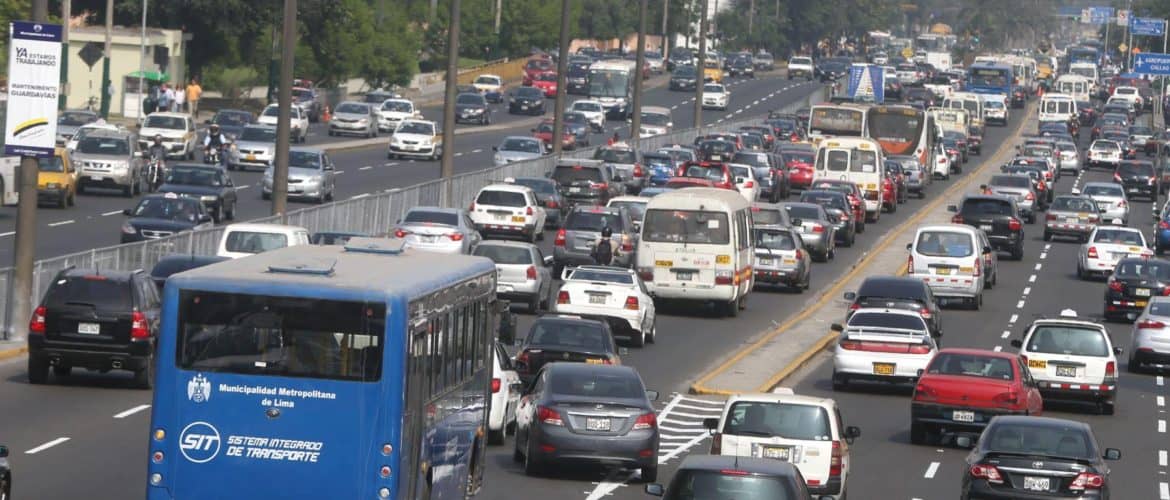
The use of transportation is one of the major determinants of health that exists as it affects physical activity, contributes to environmental pollution and generates traffic accidents. However, most information on the impact of transport on health comes from developed countries. The availability of quality information is necessary to estimate and compare the benefits of active transport policies.
Aim:
TIGHTHAT has several objectives: 1) identify, evaluate, and compare personal travel survey data and patterns for multiple settings, 2) test Google Street View to estimate traffic mode share and see if it can help predict population distributions of travel time mode share, 3) appraise urban traffic injury data in a range of settings globally, identify patterns, develop generalizable rules for combining data, and validate by testing them in case cities, 4) develop and test a generalisable approach to health impact assessment (HIA) modelling of PM2.5 from transport, and 5) Integrated HIA modelling for 4 cities in India and Brazil to test the impact of uncertainty in and choice of input data.
Study design:
To assess the impact of transport policies on health, secondary data from transport surveys, surveys of pedestrians or cyclists, records of greenhouse gas emissions, and Google Street View information will be used.
First, we will compare travel surveys and travel patterns for the settings for which we have individual information. Then we will assess the existence and availability of travel survey data and appraise their quality. In order to estimate how people travel, we will use Google Street View (GSV) and extract pictures along given routes. Regarding physical activity prevalence, we will build and ecological model to predict the self-report physical activity from GSV data. We will also build a model assess changes in injuries associated with mode of travel. To estimate exposure to local transport related air pollution, we will use information of fine particulate matter from the World Health Organization (WHO) and Emissions Database for Global Atmospheric Research (EDGAR), and we will calculate the contribution to air pollution of transport.
Result:
Contact:
J. Jaime Miranda, MD, MCs, PhD
jaime.miranda@upch.pe
Place of study
Perú
Funding
Medical Research Council
Duration of the study
2017-2019
Reserachers
J Jaime Miranda
Francisco Diez Canseco
Akram Hernández Vásquez
Jessica H Zafra-Tanaka
Collaborators
James Woodcock (PI), Marko Tainio, Rahul Goel, Leandro Garcia, Ali Abbas, Rob Johnson and Soren Brage, Center for Diet and Activity Research (CEDAR), MRC Epidemiology Unit, University of Cambridge
Audrey de Nazelle, Imperial College London
Nelson Gouveia, Universidade de Sao Paulo
Kavi Bhalla, University of Chicago
Ashish Verma, Indian Institute of Science
Geetam Tiwari, Indian Institute of Technology
Publications
News
Videos
Gallery