


Heartbeat/Creating Recovery: A case study of how people with autism, their families, health professionals and artists can create inclusive learning processes during the COVID-19 pandemic in Peru
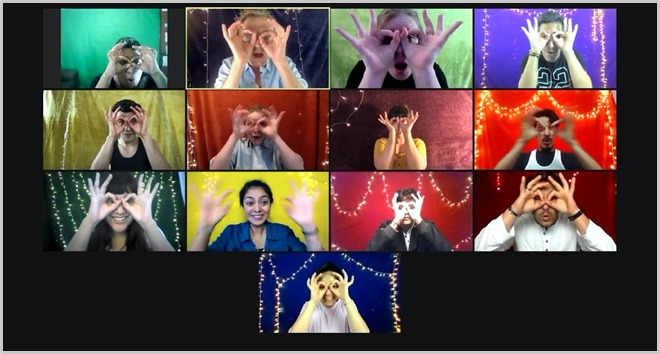
The project proposes building a collaborative and multidisciplinary alliance between theatre professionals (actors, directors, producers) and researchers from Peru and the UK, with the aim of analysing the transference process of the Hunter Heartbeat methodology between the Flute Theatre and Teatro La Plaza companies. This methodology uses theatre games and Shakespeare plays, use of rhythm, language and physical moves to involve and empower participants with autism spectrum disorders (ASDs), who, in some cases, have limitation in their verbal communication, allowing to express themselves.
The transference process of this methodology included an adaptation process to Spanish and the Latin-American context, as well as an adaptation to a virtual setting to facilitate the access during the context of the COVID-19 pandemic.
Aim:
Analyse the transference process of the Hunter Heartbeat methodology between the Flute Theatre and Teatro La Plaza companies.
Explore the benefits perceived by people with ASDs and their relatives after their participation in the activities.
Disseminate the methodology to other art groups in Latin America, promoting the work with people with ASDs in the arts.
Study design:
The project encompassed three phases: (1) preparatory phase, (2) transference and dissemination phase, and (3) process evaluation phase.
During the preparatory phase, we designed the qualitative data collection tools, conducted the recruitment of the actors for the virtual theatre laboratory, selected and invited the participants and conducted 2 initial interviews with the directors and producers from Flute Theatre and Teatro La Plaza, collaborators of the project.
During the transference and dissemination phase, we completed 4 weeks of daily sessions of the virtual laboratory theatre based on the play The Tempest by William Shakespeare. After these activities, Teatro La Plaza conducted a transference process to other arts organizations in Peru and Latin America. This transference took 2 week and consisted of daily activities, such as seminars, performances and discussions post-performance.
During the process evaluation phase, we conducted 11 semi-structured interviews, as well as10 focus groups with the different types of participants involved.
Result:
Overall, the results from the qualitative data collection show a positive perception from the participants regarding the activities and they identify improvements and benefits for the people with ASDs after taking part in the virtual theatre laboratories.
In addition, the methodology was successfully transferred from Flute Theatre to Teatro La Plaza, and from them to other organizations. Therefore, the methodology can be disseminated to other institutions and spaces in the future.
Most informants expressed interest in continuing the project activities, as well as replicating the activity or adapting it for their institutions.
Despite the positive opinions, we also collected perceived challenges and suggestions for improvement. The main challenges perceived revolve around funding, sustainability of the activities if implemented in public spaces and families’ accessibility to the internet and equipment to participate. Regarding the suggestions, participants mention adapting the activity’s duration and content, as well as format, according to the severity of the person with ASD, as well as the existing technology gaps, among others.
Contact:
Francisco Diez Canseco, MPH
Place of study
Lima, Perú
Funding
Medical Research Council
Duration of the study
April-August 2021
Reserachers
Francisco Diez Canseco
Collaborators
Profesor Paul Heritage, People’s Palace Projects, Queen Mary University of London, Reino Unido
Kelly Hunter, Flute Theatre, Reino Unido
Claudia Tangoa, Teatro La Plaza, Perú
Publications
News
Videos
Gallery