


Implementation of multiparameter point-of-care devices for non-communicable diseases at primary healthcare level. Phase 3: Implementation
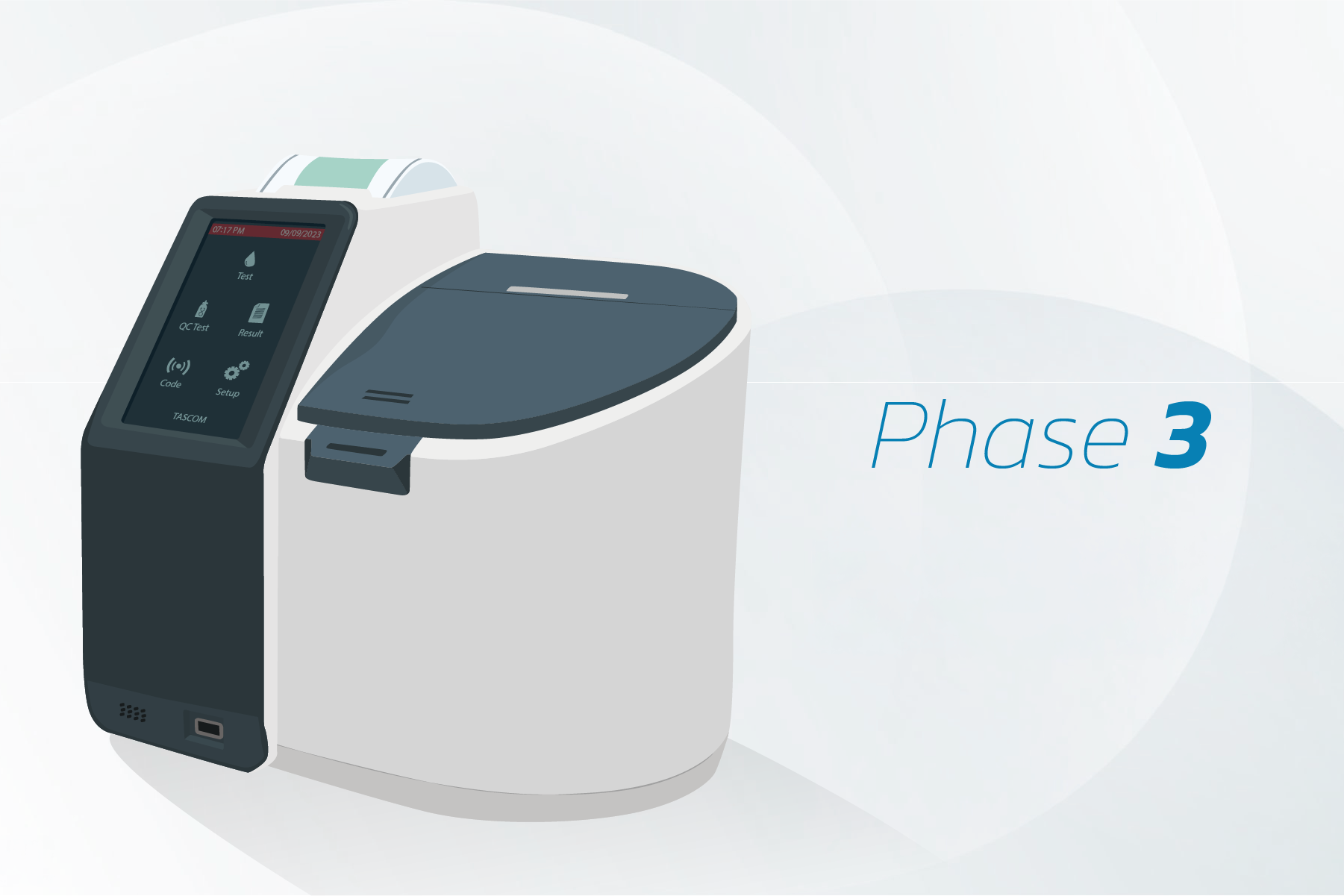
Non-communicable diseases (NCDs) are a major public health challenge globally, accounting for 71% of all deaths worldwide, with low- and middle-income countries supporting a significant burden. The main problem is the lack of awareness and access to diagnosis, treatment and follow-up to achieve treatment objectives. The implementation of point-of-care testing devices (POCT) could improve this situation.
Aim:
To determine the feasibility and potential utility of a co-created strategy for implementing multiparameter POCT device to improve care for NCDs (e.g., diabetes, hypertension, dyslipidaemia, or renal impairment) at public primary healthcare centres in urban and rural areas of Tumbes, Peru.
Study design:
This is a quasi-experimental cluster trial with concurrent control. This study will compare the usual standard of care versus the implementation of POCT in the detection and follow-up of non-communicable diseases in patients who received care at the first level. Mixed methods will be applied to assess outcomes.
The intervention will be implemented in four primary health care centres (two rural and two urban) and the study will include four control centres. For quantitative data, measurements will be collected 3 months during implementation and 3 months later during follow-up. While qualitative data (interviews) will be collected before and after the intervention.
Result:
A total of 1,243 participants were included: 607 in the intervention group and 636 in the control group. The mean age was 52.6 (SD: 16.7) years, and 74.3% were women. A total of 97.3% reported having health insurance. The evaluation of the intervention using POCT alone increased the detection of new diabetes cases compared to conventional tests (CT), with an adjusted prevalence ratio (aPR) of 1.82 (95% CI: 1.19–2.78). When the combination of POCT plus CT was assessed, intervention sites showed an even greater increase in the detection of diabetes diagnoses (aPR: 2.38, 95% CI: 1.59–3.57) and high cholesterol (aPR: 1.54, 95% CI: 1.28–1.83).
The use of POCT, either alone or in combination with conventional tests at intervention sites, significantly increased the detection rates of new cases of diabetes and high cholesterol compared to control sites that used CT only.
- Policy brief: https://goo.su/K11b7
Contact:
María Lazo Porras, MD, MSc, PhD
Place of study
Tumbes, Peru.
Funding
FIND, the global alliance for diagnostics (Geneva, Switzerland).
Duration of the study
2023 – 2024
Reserachers
María Lazo-Porras
Antonio Bernabé-Ortiz
Lucero Cahuana-Hurtado
Leonardo Albitres-Flores
Carlos Huayanay Espinoza
Collaborators
Beatrice Vetter, FIND, Geneva, Switzerland.
Elvis Safary, FIND, Geneva, Switzerland.
Centro de Salud Global.
Publications
News
Videos
Gallery