


Evaluating the Implementation and Effects of Nutrition Warnings on Food Labeling in Peru: A Mixed Methods Study
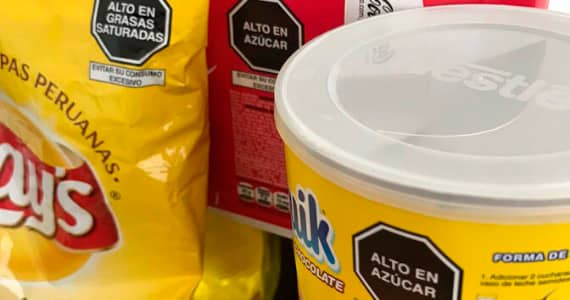
This project is a SALURBAL Ancillary Study (link with SALURBAL website http://en.cronicas-upch.pe/what-makes-cities-healthy-equitable-and-environmentally-sustainable-lessons-from-latin-america/ ), aligned with aim 2 of the principal study: to evaluate the health and environmental impact of city and neighborhood-level policies and interventions.
Aim:
This study aims to assess the implementation of mandatory nutrition warnings in front-of-pack of food labels in Peru and its effect on the food industry’s marketing strategies and consumer’s preferences.
We plan to achieve two specific aims: 1) To explore, using simple test, the influence of nutrition warning in making healthy decisions and the knowledge, practices and buying preferences of children and youth consumers of food and non-alcoholic beverages after the implementation of nutrition warnings, and 2) to identify and describe the changes in packaging and labels of food and non-alcoholic beverages after the implementation of advertising warnings in Peru and analyze the industry’s strategy behind those changes.
Study design:
During this 2-year project, we propose two phases that correspond to one specific aim.
Phase 1. We will compare the influence of different nutritional warnings designs in children. To achieve this goal, we will select 156 scholars between 10-14 years, who will be randomly assigned to one of 3 groups. Each group will received the same food products with the only difference of nutritional warning (no nutritional warning, octagonal warning and GDA + traffic light system). We will ask participants to imagine they go to the school canteen and have to buy the healthiest food between the 3 options offered.
Phase 2. We will compare and analyze food labels before and after the implementation of nutritional warnings using a data base of photographs. We will search for changes in portions sizes, nutritional and health claims, nutritional facts (changes in composition), and other characteristics of the product. Additionally, we will carry out interviews with industry representatives and marketing experts, to describe the strategies that explain the changes in food products after the implementation of the norm.
Result:
- Front-of-package WLs did not influence the purchase intention, nor the identification of the healthiest processed products between low-income adolescents one month prior to the implementation of mandatory WLs in Peru. Further studies on how other features of the product, and individual and external factors such as familiarity, could influence WLs effectiveness in the real world are necessary in Peru and countries with WLs policy implemented
- The results showed a high use of marketing on beverages and food packaging, especially for marketing techniques and nutritional claims, before and after the implementation of the FOPL policy in Peru. Some decreases in the use of marketing techniques were observed among specific food categories, but an increase in health claims was observed for beverages. Additionally, the use of marketing techniques on “high-in” products increased, while the prevalence of health claims increased on “not high-in” products after the implementation.
Contact:
Francisco Diez Canseco, BA, MPH
fdiezcanseco@upch.pe
Place of study
Lima, Perú
Funding
Wellcome Trust
Duration of the study
2018-2022
Reserachers
Francisco Diez Canseco
Lorena Saavedra Garcia
Akram Hernández Vásquez
Collaborators
Publications
- Saavedra-Garcia L, Meza-Hernandez M, Yabiku-Soto K, Hernandez-Vasquez A, Kesar HV, Mejia-Victorio C, et al. Food and beverage supply and advertising in schools and their surroundings in Metropolitan Lima. An exploratory study. Rev Peru Med Exp Salud Publica. 2020;37(4):726-32. https://rpmesp.ins.gob.pe/rpmesp/article/view/5838
- Saavedra-Garcia L, Moscoso-Porras M, Diez-Canseco F. An Experimental Study Evaluating the Influence of Front-of-Package Warning Labels on Adolescent’s Purchase Intention of Processed Food Products. International Journal of Environmental Research and Public Health. 2022;19(3):1094. https://www.mdpi.com/1660-4601/19/3/1094
- Saavedra-Garcia L, Taboada-Ramirez X, Hernández-Vásquez A, Diez-Canseco F. Marketing techniques, health, and nutritional claims on processed foods and beverages before and after the implementation of mandatory front-of-package warning labels in Peru. Frontiers in Nutrition. 2022;9. https://www.frontiersin.org/articles/10.3389/fnut.2022.1004106/full
- Saavedra-Garcia L, Meza-Hernández M, Diez-Canseco F, Taillie LS. Reformulation of Top-Selling Processed and Ultra-Processed Foods and Beverages in the Peruvian Food Supply after Front-of-Package Warning Label Policy. International Journal of Environmental Research and Public Health. 2023; 20(1):424. https://doi.org/10.3390/ijerph20010424. https://www.mdpi.com/1660-4601/20/1/424
News
Videos
Gallery