


Understanding and modelling the distribution of the double burden of malnutrition in Peru
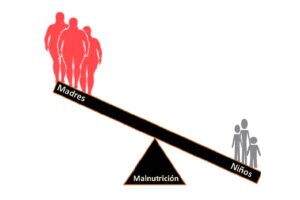
Peru, as well as other low and middle-income countries, has undergone a dramatic nutritional transformation in the last 30 years due to social and economic development. This is reflected in the increase in the prevalence of obesity. However, malnutrition has remained constant, with the highest rates observed among children. These two paradoxical scenarios associated with malnutrition are a challenge for entities involved in making health decisions. Therefore, it is necessary to analyze reliable data to inform policy makers and stakeholders about patterns in health and illness profiles of the population that is going through such social and economic changes; especially in the mother-child dyad, of which there is not much information.
Aim:
To generate collaborative links between the University of Cardiff in United Kingdom and Universidad Peruana Cayetano Heredia to assess trends and patterns of the double burden of malnutrition considering the mother-child dyad nutritional status; also, to predict the probability of different nutritional status (malnutrition or overweight or obesity) of this dyad according to demographic, socioeconomic, migration, and health variables, among others.
Study design:
Secondary data analysis of the Demographic and Family Health Survey (DHS) conducted in Peru by the National Institute of Statistics and Informatics from 1992 to 2017.
Result:
See publications.
Contact:
Antonio Bernabé-Ortiz, MD, MPH, PhD
antonio.bernabe@upch.pe
Place of study
Lima, Perú
Funding
Newton Fund – Institutional Links de FONDECYT – CONCYTEC
Duration of the study
2019-2020
Reserachers
Antonio Bernabé-Ortiz
J Jaime Miranda
Rodrigo M. Carrillo-Larco
Cecilia Anza-Ramírez
Akram Hernandez
Collaborators
Marco Pomati, Cardiff University
Shailen Nandy, Cardiff University
Publications
- Pomati M, Mendoza-Quispe D, Anza-Ramirez C, Hernandez-Vasquez A, Carrillo-Larco RM, Fernandez G, Nandy S, Miranda JJ, Bernabe-Ortiz A. Trends and patterns of the double burden of malnutrition (DBM) in Peru: a pooled analysis of 129,159 mother-child dyads. Int J Obes 2021;45(3):609-618. https://www.nature.com/articles/s41366-020-00725-x
- Mendoza-Quispe D, Hernandez-Vasquez A, Miranda JJ, Anza-Ramirez C, Carrillo-Larco RM, Pomati M, Nandy S, Bernabe-Ortiz A. Urbanization in Peru is inversely associated with double burden of malnutrition: Pooled analysis of 92,841 mother-child pairs. Obesity 2021;29(8):1363-1374. https://onlinelibrary.wiley.com/doi/10.1002/oby.23188
News
Videos
Gallery