


CRONICAS: Addressing geographical variation on the progression of non-communicable diseases in Peru
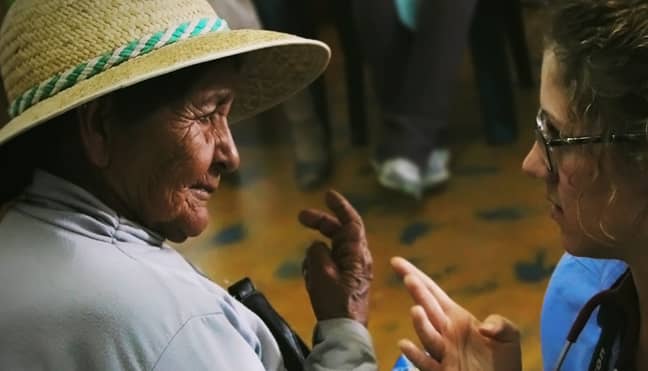
The present study consists of the establishment of a cohort in four different populations, with different degrees of urbanization and altitude. The longitudinal design, that is, a follow-up over time (four years) of all participants, establishes a solid basis for research on non-communicable diseases in Peru.
Aim:
To investigate the geographical variations regarding the risk factors for cardiovascular and pulmonary diseases, the deaths caused by these in a period of 3.5 years, and to estimate the increase and influence of environmental pollution in chronic obstructive pulmonary diseases.
Study design:
This project will study the rate at which non-communicable diseases present over time in different geographic locations. The hypothesis of the project was as follows: the progression towards the acquisition of hypertension, diabetes, chronic obstructive pulmonary disease and obesity is different in each of the study sites.
The study, conducted in four different populations, provides a solid foundation for epidemiological investigation of noncommunicable diseases in Peru. The populations in which it is being carried out are: San Juan de Miraflores in Lima, semi-urban towns in Tumbes, as well as urban and rural areas in Puno. This study began its activities in August 2010, following up all the participants for a total of 3 and a half years. The first follow-up evaluation was carried out 20 months and the second 40 months after the start of the project.
The methodology, evaluation and standardization were the same in all the study sites, with the participation of people aged 35 and over, of both sexes, reaching a total of approximately 3,000 people.
Result:
There are different patterns of progression of the studied noncommunicable diseases according to the study site. Similarly, the prevalence and incidence of obesity, hypertension, diabetes mellitus 2, and pulmonary function show heterogeneity in their distribution.
Contact:
Jaime Miranda Montero, MD, MSc, PhD
jaime.miranda@upch.pe
Place of study
Lima, Tumbes y Puno, Perú.
Funding
National Heart, Lung and Blood Institute, National Institutes of Health.
Duration of the study
2010 – 2014
Reserachers
J Jaime Miranda
Antonio Bernabé-Ortiz
Collaborators
Robert H. Gilman MD.
William Checkley, MD, PhD, Johns Hopkins University, United States.
Publications
- Miranda JJ, Bernabe-Ortiz A, Smeeth L, Gilman RH, Checkley W. Addressing geographical variation in the progression of non-communicable diseases in Peru: the CRONICAS cohort study protocol. BMJ Open . 2012 Jan 11;2(1):e000610. https://n9.cl/wmwj2
- Bernabe-Ortiz A, Carrillo-Larco RM, Gilman RH, Checkley W, Smeeth L, Miranda JJ. Impact of urbanisation and altitude on the incidence of, and risk factors for, hypertension. Heart 2017 Jun;103(11):827-833. https://heart.bmj.com/content/103/11/827.long
- Bernabe-Ortiz A, Carrillo-Larco RM, Gilman RH, Miele CH, Checkley W, Wells J, Smeeth L, Miranda JJ. Geographical variation in the progression of type 2 diabetes in Peru: The CRONICAS Cohort Study. Diabetes Res Clin Pract 2016 Nov;121:135-145. https://linkinghub.elsevier.com/retrieve/pii/S0168-8227(16)30598-8
- Carrillo-Larco RM, Miranda JJ, Gilman RH, Checkley W, Smeeth L, Bernabe-Ortiz A. Trajectories of body mass index and waist circumference in four Peruvian settings at different level of urbanisation: the CRONICAS Cohort Study. J Epidemiol Community Health 2018 May;72(5):397-403. https://jech.bmj.com/content/72/5/397.long
News
Videos
Gallery