


CONEMO Study: Randomized Clinical Trial to Evaluate the Effectiveness of a Mobile Technology Intervention in the Treatment of Depressive Symptoms in People with Diabetes or Hypertension in Lima, Peru
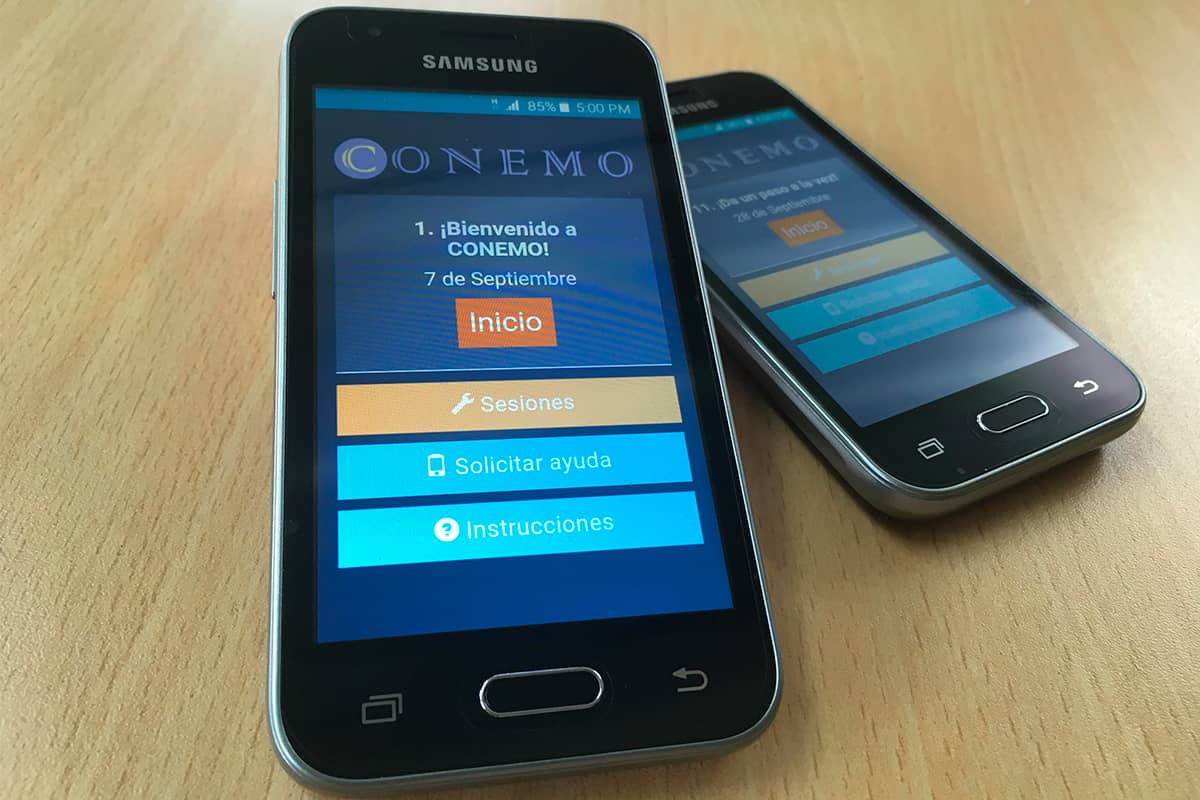
Depression is one of the most common mental disorders and the leading cause of disability worldwide. People with non-communicable diseases, such as diabetes or hypertension, have a high risk of suffering depression. This comorbidity can have negative consequences for the progress of the disease and for the adherence to its treatment. However, most people with mental illnesses do not receive treatment. There is a shortage of financial and human resources, as well as an inadequate distribution of funds and assigned personnel. In order to reduce the depression treatment gap in Latin America, innovative and effective strategies must be used to expand the coverage of mental health care for the population. The use of technology can be an effective method to deliver effective treatments and expand care coverage in underserved populations. Another strategy is the delegation of functions from a specialist to a person not specialized in mental health (task-shifting). The CONEMO Study takes these two principles into account and evaluates the effectiveness of a mobile intervention involving nurses to monitor study patients (rather than psychologists or psychiatrists).
Aim:
The CONEMO study has several objectives: 1) To evaluate the effectiveness of CONEMO, compared to standard health care, in reducing depressive symptoms in people with hypertension and/or diabetes, 3 months after their inclusion in the study, 2) To evaluate the effectiveness of CONEMO, compared to standard health care, in reducing depressive symptoms in people with hypertension and/or diabetes, 6 months after their inclusion in the study, 3) To evaluate the effectiveness of CONEMO, compared to the standard health care, in the reduction of depressive symptoms and in the improvement (a) of functionality and disability, (b) quality of life, (c) adherence to medication for diabetes or hypertension, and (d) daily activity levels, at 3 and 6 months after their inclusion in the study.
Study design:
Individually randomized clinical trial. Participants assigned to the control group received enhanced usual care, which consisted of regular care from health services, in addition to referral or advice to seek specialized care to treat depressive symptoms. Participants of the intervention group received a Smartphone that had the CONEMO app installed, and during 6 weeks, received a total of 18 sessions. In addition, they were accompanied by a nurse who monitored their progress from a web platform and helped them solve technical problems with the technology.
The expected result was to reduce, at 3 months, by at least 50% the initial score of the PHQ-9 Questionnaire (test to measure depressive symptoms, which score ranges from 0 to 27, with cut-off points at 10, 15 and 23 points ). Therefore, if a patient began the study with a score of 18 points, the expected result was that at 3 months, it would be reduced to at least 9 points.
Result:
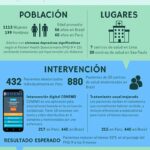
A total of 432 people with diabetes and/or hypertension and symptoms of depression (217 intervention group, 215 control group) who were treated in hospitals of the Ministry of Health and health centers of EsSalud participated in the study.
The proportion of participants with a reduction in the PHQ-9 score of at least 50% at 3-month follow-up was 52.7% (108/205 participants) in the intervention group versus 34.1% (70/205 participants) in the control group. However, these results were not maintained at 6 months. Although the group that used CONEMO maintained this improvement at 6 months, the group that did not receive the intervention also showed symptoms reduction up to that date. This would suggest that, even without treatment, people may improve their depressive symptoms over time; however, CONEMO would seem to speed up the recovery period, which would be beneficial for patients and people around them, as well as lead to greater productivity (e.g. return to work earlier).
Contact:
Francisco Diez Canseco BA, MPH
fdiezcanseco@upch.pe
Place of study
Perú
Funding
National Institute of Mental Health
Duration of the study
2013 – 2018
Reserachers
Francisco Diez Canseco
J Jaime Miranda
Lena Brandt
Mauricio Toyama
Liliana Hidalgo
Jill Portocarrero
Victoria Cavero
Collaborators
Paulo Rossi Menezes, Universidad de Sao Paulo
Ricardo Araya, Kings College London
David Mohr, Northwestern University
Publications
- Araya R, Menezes PR, Claro HG, Brandt LR, Daley KL, Quayle J, Diez-Canseco F, Peters TJ, Cruz DV, Toyama M, Aschar S. Effect of a Digital Intervention on Depressive Symptoms in Patients With Comorbid Hypertension or Diabetes in Brazil and Peru: Two Randomized Clinical Trials. JAMA. 2021 May 11;325(18):1852-62.
https://jamanetwork.com/journals/jama/article-abstract/2779828 - Menezes P, Quayle J, Claro HG, Da Silva S, Brandt LR, Diez-Canseco F, Miranda JJ, Price LN, Mohr DC, Araya R. Use of a mobile phone app to treat depression comorbid with hypertension or diabetes: a pilot study in Brazil and Peru. JMIR mental health. 2019 Apr 26;6(4):e11698.
https://pubmed.ncbi.nlm.nih.gov/31025949/ - Brandt LR, Hidalgo L, Diez-Canseco F, Araya R, Mohr DC, Menezes PR, Miranda JJ. Addressing depression comorbid with diabetes or hypertension in resource-poor settings: a qualitative study about user perception of a nurse-supported smartphone app in Peru. JMIR mental health. 2019 Jun 18;6(6):e11701.
https://pubmed.ncbi.nlm.nih.gov/31215511/ - Dos Santos DV, de Soárez PC, Cavero V, Rocha TI, Aschar S, Daley KL, Claro HG, Scotton GA, Fernandes I, Diez-Canseco F, Brandt LR. A Mobile Health Intervention for Patients With Depressive Symptoms: Protocol for an Economic Evaluation Alongside Two Randomized Trials in Brazil and Peru. JMIR research protocols. 2021 Oct 13;10(10):e26164.
https://pubmed.ncbi.nlm.nih.gov/34643538/
News
Videos
Gallery