


Implementation of text messaging and thermometry for diabetic foot ulcer prevention
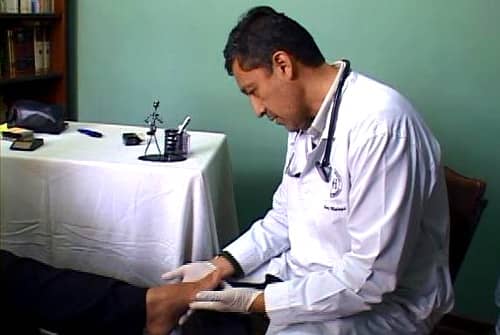
The study will evaluate the use of two technologies, thermometry, and mobile phones, for the benefit of people with type 2 diabetes at high risk of ulceration, including those with a previous history of ulcers or partial amputations, and those with deformities and neuropathy.
Aim:
The primary objectives are: (1) Compare the incidence of ulceration during the study period between the group that received thermometry alone and the group that received thermometry plus text and voice messages. (2) Compare adherence to using the foot thermometer between the two groups.
Study design:
This is a pragmatic experimental trial. The intervention for the control group, known as «thermometry alone,» consists of giving each participant the TempStat. The TempStat is a device that takes a thermal image of the feet and uses colors to indicate different temperatures. The participant will have to use the TempStat daily and will be trained to recognize some alarm signs such as (1) yellow areas on thermal image for two consecutive days; (2) different colors between one-foot area and the contralateral for two consecutive days; (3) skin lesions at any time. In any of these three scenarios, the participant will contact the study nurse by telephone. In the first two scenarios, the nurse will instruct the participant to reduce physical activity until temperatures normalize; if the alarm sign persists for one week, the participant will be invited to a consultation with the blinded assessor. In the case of the third scenario, the participant will be invited for a face-to-face evaluation with the evaluator who is blinded to the intervention.
In the intervention for the “thermometry + messaging group”, the participant will receive everything explained in the previous paragraph and additionally they will receive text and voice messages as a reminder to use TempStat and as a motivator to promote foot care.
Result:
A total of 172 patients (63% women, mean age 61 years) were enrolled; 86 to each study group. More patients enrolled in the intervention arm had a history of previous diabetic foot ulcer (66% vs. 48%). Follow-up for the primary endpoint was complete for 158 of 172 participants (92%). Adherence to ≥80% of daily temperature measurements was 87% (103 of 118) among the study participants who returned the logbook. Diabetic foot ulcer cumulative incidence was 24% (19 of 79) in the intervention arm and 11% (9 of 79) in the control arm. After adjusting for history of foot ulceration and study site, the hazard ratio (HR) for diabetic foot ulcer was 1.44 (95% CI 0.65, 3.22).
Contact:
María Lazo Porras, MD, MSc
maria.lazo@upch.pe
Place of study
Lima, Perú
Funding
Fogarty International Center – National Institute of Health.
Duration of the study
2015 – 2017
Reserachers
J Jaime Miranda
Antonio Bernabe-Ortiz
Germán Malága
María Lazo Porras
Collaborators
Robert H. Gilman, MD, DTMH.
Katherine Sacksteder, PhD.
David Armstrong, DPM, MD, PhD.
Publications
- Maria Lazo-Porras, Antonio Bernabe-Ortiz, Katherine A. Sacksteder, Robert H. Gilman, German Malaga, David G. Armstrong, J. Jaime Miranda. Implementation of foot thermometry plus mHealth to prevent diabetic foot ulcers: study protocol for a randomized controlled trial. Trials.2016 Apr 19;17(1):206. doi: 10.1186/s13063-016-1333-1. Study protocol for a randomized controlled trial
- Lazo-Porras M, Bernabe-Ortiz A, Taype-Rondan A et al. Foot thermometry with mHeath-based supplementation to prevent diabetic foot ulcers: A randomized controlled trial [version 2; peer review: 3 approved]. Wellcome Open Res 2020, 5:23. https://wellcomeopenresearch.org/articles/5-23
- Pesantes MA, Del Valle A, Diez-Canseco F, Bernabé-Ortiz A, Portocarrero J, Trujillo A, et al. Family Support and Diabetes: Patient’s Experiences From a Public Hospital in Peru. Qual Health Res. 2018 Oct;28(12):1871–82.
News
Videos
Gallery