


PERU MIGRANT Study. Study of rural to urban migration and its impact on cardiovascular diseases in Peru
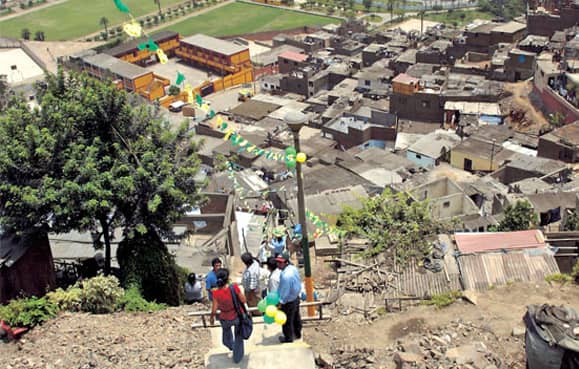
The «grand challenges» of research and policies, in this area, highlight the need to study the impact of poverty and urbanization on noncommunicable diseases. Urban areas in developing countries are growing rapidly and their populations are larger. Therefore, it is imperative to better understand the impact of migration on health in these settings.
Aim:
To provide updated assessments of the impact of rural-urban migration on health, especially cardiovascular risk factors, by determining the magnitude of differences in cardiovascular risk factor profiles between migrant and non-migrant groups of participants.
Study design:
PERU MIGRANT is a longitudinal study of three sectors of the population: the first sector selected was the rural population, understood as the population born in Ayacucho that has always lived in rural areas; the second sector studied was the population born in Ayacucho that has migrated from rural to urban areas and currently resides in Lima; and the third population sector included in the study was the urban population born in Lima that has always lived in urban areas and currently resides in this city.
The hypothesis was that the risk of cardiovascular disease increases in the population after emigration from rural to urban areas of Peru. Special emphasis was placed on determining the magnitude and direction of the differences in cardiovascular disease risk factor profiles.
We worked with a population sweep during the years 2007-2008. Initially, population censuses of the area were carried out or updated to identify the migrant and non-migrant population potentially eligible for the study. Participants were then randomly selected and invited to participate in the study. Those who accepted were invited to answer questionnaires, complete a clinical assessment to measure weight, height and blood pressure. In addition, a blood biomarker screening test was also performed to identify lipid profile, metabolic profile (fasting blood glucose, glycosylated hemoglobin, insulin) and inflammatory profile (fibrinogen and C-reactive protein).
After completion of the field phase, a total of 989 participants completed the study, providing cardiovascular information.
Result:
The impact of rural to urban migration on the cardiovascular risk profile is not uniform for the different risk factors, and is also influenced by the age at which migration occurs. A gradient in the levels of some risk factors was observed between the different study groups. This observation indicates that urbanization is indeed detrimental to cardiovascular health, although its adverse effect is not uniform in its magnitude.
The reduction of chronic disease risk factors in migrant populations in low- and middle-income countries represents one of the main challenges for public health in the 21st century.
These results challenge the prevailing view that the cardiovascular risk factor profile of the migrant population approximates the profile of urban dwellers.
This study has been one of the few to contribute information from rural, Andean and Peruvian populations to global estimates as part of the Global Burden of Metabolic Risk Factors for Chronic Diseases initiative.
Contact:
Jaime Miranda Montero, MD, MSc, PhD
jaime.miranda@upch.pe
Place of study
Lima y Ayacucho, Perú
Funding
Wellcome Trust (baseline study)
Universidad Peruana Cayetano Heredia (follow-up study)
Duration of the study
2004 – 2009 (baseline study)
2013 – 2014 (first follow-up)
Reserachers
J Jaime Miranda
Antonio Bernabé–Ortíz
Collaborators
Liam Smeeth, MBChB, FRCGP, FFPH, MSc, PhD, London School of Hygiene and Tropical Medicine, Inglaterra
Robert H. Gilman, MD, Johns Hopkins University, Estados Unidos
Publications
News
Videos
Gallery